

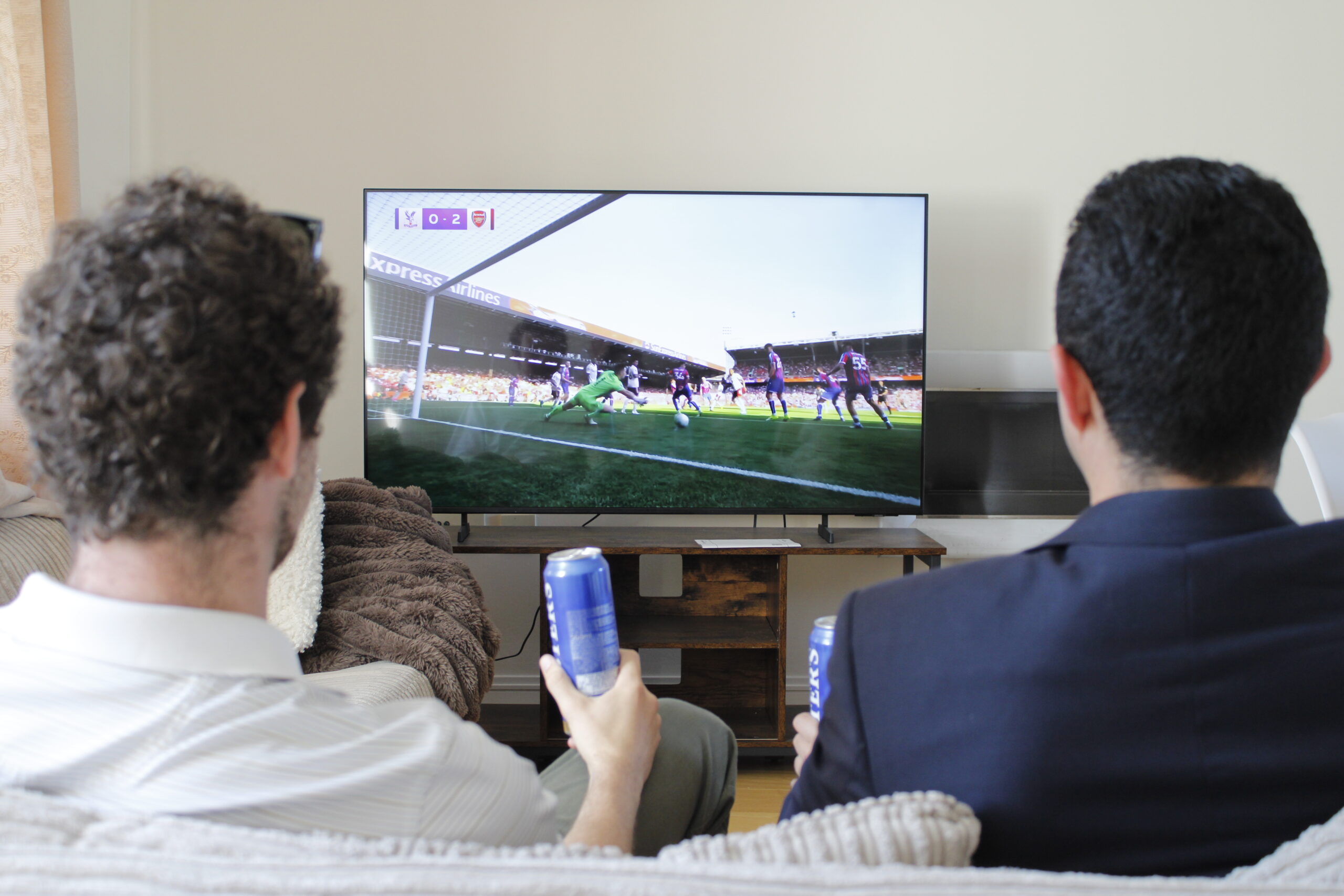
Watching the Premier League can set fans back hundreds of pounds a year. Millions of supporters have gone underground instead
For millions of British football fans, watching the Premier League has become an unjustifiable luxury. Subscriptions to Sky Sports and TNT Sports, the two broadcasters who hold rights to show live Premier League action in the UK, can cost upwards of £650 per year combined.
In response, an underground market has quietly flourished, built around modified streaming devices, unofficial IPTV (Internet Protocol Television) and cheap subscriptions.
The technology is simple enough. “It’s as simple as buying a regular Firestick off Amazon and then downloading an app that allows you to download other stuff off the web,” says Teddy, a 24-year-old Manchester United fan who declined to provide his surname.
Read more: How to save an endangered language
“You don’t have to jailbreak anything – it’s mad how easy it is.” He pays an annual £60 a year subscription to watch live sport.
Those selling access to these servers operate in the shadows, communicating through highly encrypted messaging apps and building their customer bases via word-of-mouth.
A seller on Telegram, who wished to remain anonymous, charges a similar rate to Teddy’s provider. He offers customers access to all sports including pay-per-view and free-to-air channels, plus films and series. He describes himself as “medium-size” and knows of operators both 10 times smaller and larger than himself.
Teddy’s device has become his one-stop shop for everything he could possibly wish to watch, from live Manchester United matches and the UEFA Champions League to boxing bouts and hit mafia series The Sopranos.
The fragmentation of legitimate services frustrates him as much as the cost: “The idea that you have to buy so many different subscriptions – TNT Sports, Amazon Prime, Sky Sports – to watch games you might not even care that much about is mad.”
“It’s as simple as buying a regular Firestick off Amazon and then downloading an app that allows you to download other stuff off the web,”
Teddy previously worked in the anti-piracy industry and believes the sector has largely brought the illegal streaming boom on itself. “Piracy went to an all-time low in the early 2010s because Netflix was quite cheap and offered quite a lot,” he says. “As they’ve increased in price, piracy has gone back up to record levels. It’s an industry issue of trying to milk consumers at every level.”
The anonymous seller largely agrees. “If Sky brought their price down to the same as an average IPTV cost, they could get far more monthly subscriptions,” he says, adding that he doesn’t lose any sleep over any loss in revenue for clubs themselves: “Sky will always pay top dollar for broadcasting rights. It does harm Sky, but not the clubs.”
Kieron Sharp sees things very differently. He is a representative from the Federation Against Copyright Theft (FACT), a company that assists the Premier League with piracy offences. His organisation estimates that around 40 per cent of the UK adult population have used illegal streaming services. “It would get completely out of hand if we didn’t do what we did,” he says.
Some argue this form of piracy is a victimless crime, one that Teddy and many others using such devices appear relatively relaxed about. Sharp is firm in his response: “When Sky pay the Premier League £5.5bn for football rights, that money goes to the clubs, down to grassroots football. It’s far, far from a victimless crime.”
There are other risks consumers of so-called ‘dodgy firesticks’ rarely consider. FACT’s research suggests more than 40 per cent of people who have accessed illegal streams have subsequently experienced phishing attempts, malware or age-inappropriate content on their devices. “It’s not scaremongering,” adds Sharp. “It’s a fact.”
Teddy is aware of these risks but says his main concern is more specific. “The only thing that genuinely concerns me is whether the people providing the service are involved in organised crime,” he says, which Sharp says is common.
The seller, for his part, appreciates the ethical dilemma of providing his service. “Every day I wrestle with my conscience,” he admits.
Enforcement has ramped up dramatically in recent years, with the seller saying he faces “ten times more pressure in the last two years” than before. FACT confirms that this pressure is intentional and growing, though prosecution is often reserved for only the most serious operators.
Mark Gould, ringleader of the illegal streaming service Flawless TV, was sentenced to 11 years in prison in May 2023. Earlier this year, he was ordered to return £2.35m by August, or face a further decade behind bars.
For smaller sellers and end users, the strategy is disruption: cease-and-desist letters, knock-and-talks and the slow draining of profitability from the market. “We tend to preserve prosecution for the most egregious offenders,” Sharp says, “but end users do also commit a crime, albeit to a much lesser degree.”
Whether fear of prosecution will ever outweigh the saving of £650 a year – equivalent to 112 pints of lager at Old Trafford – remains uncertain. Asked what a single, affordable, legal football subscription would do to the market, Teddy was honest: “If it was a reasonable price, I’d probably be much more likely to consider doing it.”
The seller put it even more plainly, suggesting that broadcasters like Sky could solve the problem themselves if they had the willpower to do so.
But for now, as long as watching the Premier League continues to cost more than many households can reasonably afford, the demand for a cheap alternative is unlikely to dry up.
Featured image credit: Tom Tarlton
