

As technological change leaves millions feeling anxious, a growing community is finding a novel way to face the fear
Sofiia Matsiutsia rode 30 minutes by bike through relentless London rain to reach the pub. For weeks her social feeds had filled with strangers boasting about entire software businesses they’d built in little more than an afternoon. She wanted in.
When she arrived, soaked, she found eight people around a table drinking beer. “They were so cute,” she says. “We spent two or three hours just talking about vibe coding and how we all feel lonely and a bit scared. I felt that I could be seen and my fear could be seen. And if someone else could feel the same, then maybe I’m not alone.”
The gathering, organised by AI engineer Dan Porder, has since grown into the Vibe Coding Collective – a community group that brings people together in pubs and parks to learn about, and experiment with, AI. More specifically, with vibe coding.

The term refers to a way of using AI to build software without prior technical knowledge. Unlike traditional coding, which requires learning languages like Python from scratch, vibe coding lets anyone describe a project or idea in plain language and receive a working program in return.
Named Collins Dictionary’s Word of the Year in 2025, it sits at the intersection of accessibility and anxiety: a technology that promises to democratise software development while unsettling the people it is supposed to empower.
That unease is widespread. A recent study by King’s College London’s Policy Institute found that 41 per cent of people in the UK are afraid of AI. Organisation psychologist Gena Cox says the fear is rational, with routine cognitive work being absorbed by AI faster than workers can retrain.
“There’s so much uncertainty,” she says. “The only thing that is certain is the change. What we know is that it’s helpful to share experiences, to hear from other people, to have that sense that you’re not crazy for feeling fearful or anxious.”
The Vibe Coding Collective aims to do exactly that: reduce fear by encouraging people of all backgrounds to engage with the very thing that frightens them.
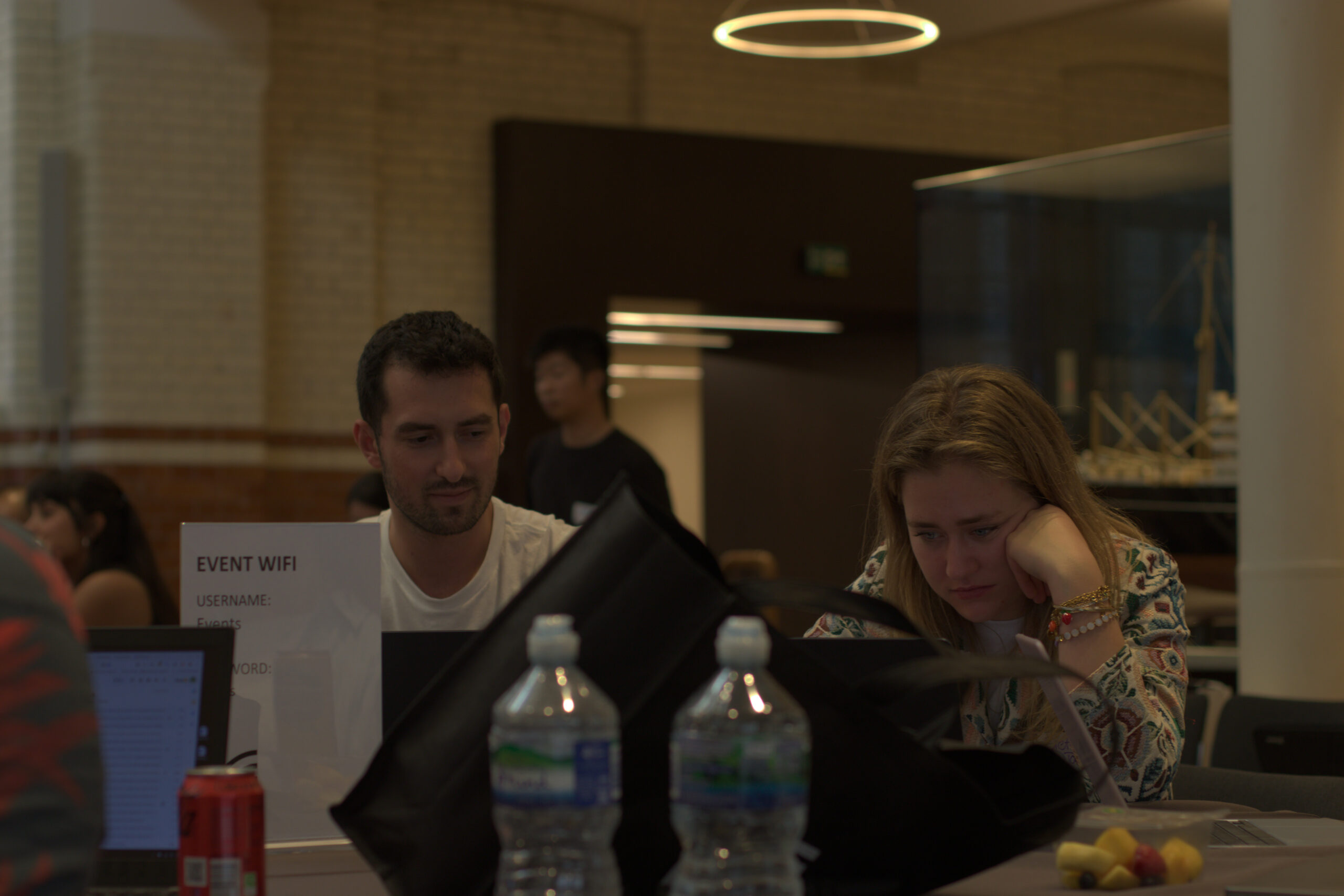
At events, attendees build apps and software tailored to their own needs – anything from bespoke games to a Tamagotchi-style AI that demands food and complains when neglected. The latter was created by Matsiutsia as a deliberate counterpoint to the agreeable AI assistants that dominate the market.
“Every agent is too good – mirroring your ego, mirroring your soul,” she says. “I was thinking, maybe it would be great to create a devil voice.” That playful spirit shapes the events themselves. The collective consciously avoids what it calls the “LinkedIn style” of so much of the London tech scene. Rather than sterile officers, bright lights and rows of chairs, it favours pubs, cafés and community spaces.
“Dim the lights, turn on some music,” says Porder. “People come because they want social connection. You could learn vibe coding on YouTube. You could use the tool in your bedroom. But you come because there’s this narrative that technology is making us more lonely, more isolated. We want to show there’s a way to use it to bring people closer together.”
For Joseph Wan, the collective became a remedy for a fear he had largely kept to himself. An artist with a background in computer programming, Wan had long used technology as the foundation of his work. But after taking a short break from the AI news cycle to relocate from Hong Kong to the UK, he returned to find the landscape had shifted dramatically. “I felt a little fear,” he says. “Like I was already behind – and only three months had passed.”
Wan says the collective offered something that conventional tech conferences could not. “I usually go to conferences that are quite technical and when you talk to people there’s this fear of saying the wrong words or using the wrong concept,” he says. “The Vibe Coding Collective was basically the first group where I could just go and chill. Most people there don’t have a high technical background – a lot of artists, musicians and people who just want to have fun.”
Now fluent in vibe coding, Wan uses it to build programs for his art projects, work that would previously have taken him a month. The collective has also shifted how he thinks about AI more broadly.
“Most artists think AI isn’t working in their favour right now,” he says. “But in a group where people have different opinions, and feel comfortable expressing what they like and dislike about a technology — that gives you a lot of inspiration. It helps you see things completely differently.”
Years on, Matsiutsia has joined Porder in running meet-ups in Boston, Amsterdam and Kyiv. The collective keeps growing because the technology that promises to make everything faster, easier and more personalised has also left many people feeling scared and, above all, alone. What the pub offers, on a rainy weeknight, is a way to face the fear together.
Featured Image Credit: Seth Pollak
