

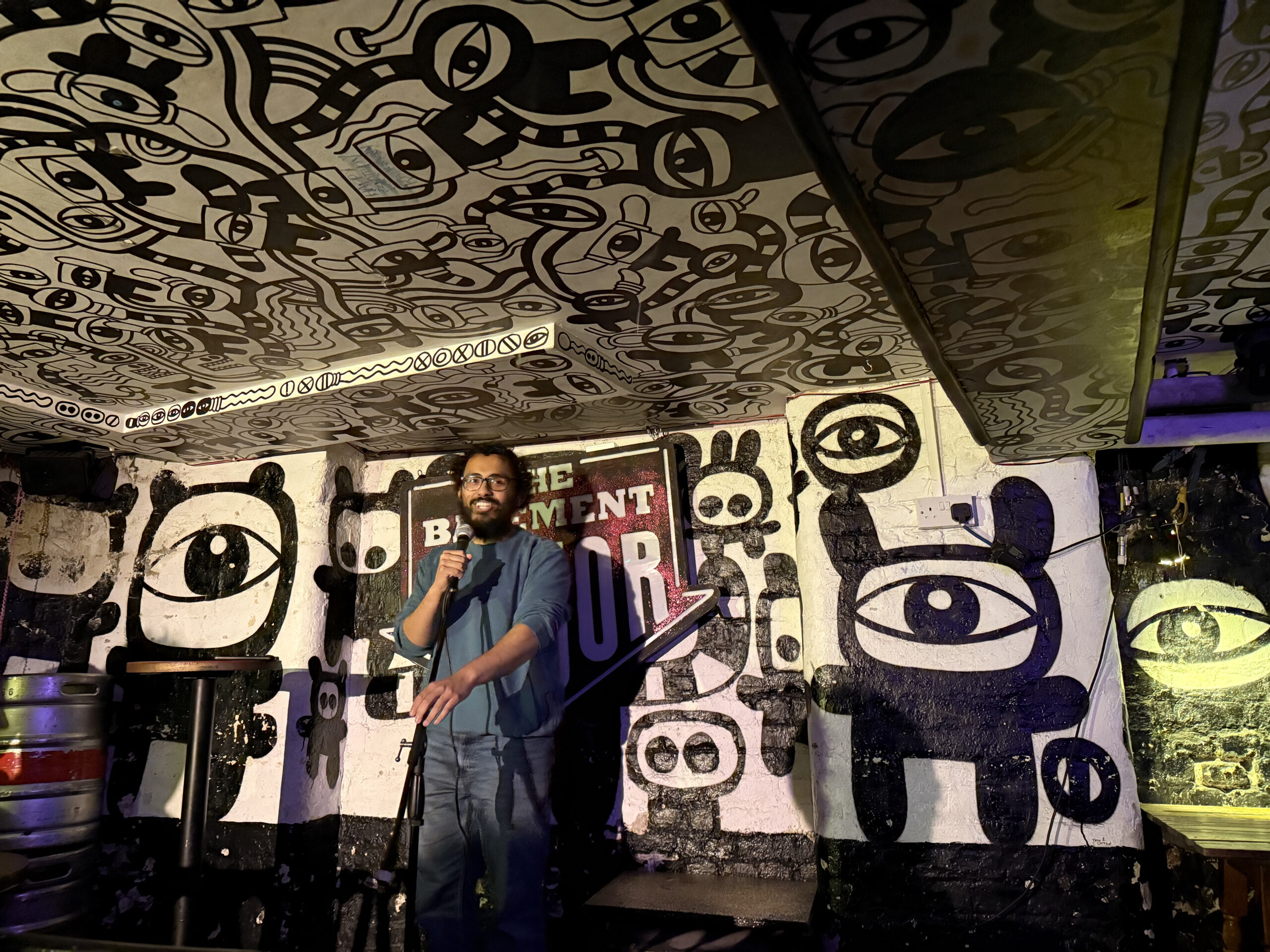
Growing reach is proving a double-edged sword for South Asian creators
Comedian Jamie D’Souza says he used to feel relatively optimistic about the world. That is, until one of his videos went viral on Facebook through Comedy Central UK.
As he scrolled through the comment section, he was shocked that over half of the 50 or so comments were about him being Indian, including one that said “get rid of the curry”.
“I’d probably enjoy having an argument,” D’Souza says. “But then there are also days when I’m feeling more depressed about the state of the world, where you do just feel frustrated about it and annoyed and angry.”
D’Souza is one of many South Asian content creators on social media who have experienced a rise in hate speech after the algorithm placed their content in front of new audiences – and it has changed the way they make their content.
After looking up their individual accounts, D’Souza started responding to his trolls in the comment section to make fun of them. Those who left racially motivated posts were mostly middle-aged white people from the UK, he says.
“So many of them had added that racial layer to it,” D’Souza adds. “It was real ‘people not liking something’ and then using the first noticeable thing about me to criticise me and use it as a weapon.”
D’Souza is not the only one facing increasing hate. In just three months, 680 posts of anti-Indian hate speech on X garnered 281 million views, according to a 2025 study conducted by the Center for the Study of Organized Hate (CSOH). Between July and September 2025, over 100 posts analysed in the study included anti-Indian slurs, and drew 74.3 million views worldwide.
A large contribution to this rise are social media algorithms, says Raqib Naik, the executive director of CSOH. More inflammatory and derogatory content gets more views as a product of designing these platforms to be increasingly addictive.
“It’s a tried and tested method on Instagram and on X, specifically, where you would see some of these so-called influencers or disinfluencer accounts, which literally had a few thousand followers a few years ago,” Naik says. “As soon as they started targeting migrants, their followers [count] literally ran through the sky.”

According to Naik, another contributor to the rise in anti-Indian hate is the resurgence of far-right groups and their lack of fear of repercussions around speaking openly about their prejudices. When South Asian content creators break into the main sphere and land on the “for you” pages of those people, it can lead to inflammatory language.
“It’s just white supremacy on steroids,” Naik says. “Doesn’t matter whatever you do, as long as you’re a person of colour, you’re going to be the target.”
X and Instagram have become echo chambers for hate due to a lack of moderation by Meta officials, Naik adds. In January of this year, Mark Zuckerberg announced changes to Meta’s content policy, including looser moderation in favour of “freedom of speech”.
“It’s pretty much the problem of platform design in itself and the lack of will on the part of the platforms to do anything about it,” Naik says. “Because at the end of the day, it just feeds their business model.”
D’Souza was shocked by the comments on the Comedy Central page. If the algorithm were to put him in front of a crowd like that every day, he says, he might not have the energy to fight back and be playful.
“You do go through a bit of a cycle of emotions,” he sighs. “And now, probably how I feel about it is just sad. In the last few years, things have just gotten so much more hostile. I do now feel like there is more hostility towards brown people that I maybe didn’t feel five years ago.”
In a viral video on Instagram, content creator Rishi Khiroya says that the hate South Asians get on social media has divided content creators into two distinct categories: “one either hiding and suppressing their Indian side or two, motivating us to represent and draws us closer to our roots, culture and language”, he says in the video.
Ridwan Hussain, a Bangladeshi comedian who has received hate from South Asians and others as a result of his content, has chosen to embrace his own roots.
In a comment on one of his comedy videos, someone said, “Move over, Romesh. There’s another one”, referencing Taskmaster comedian Romesh Ranganathan. He has also received racist slurs from Indian audiences.
“I thought it was funny,” Hussain shrugs. “I don’t feel threatened by it because – I don’t know, it feels detached.”
Hussain says even if the algorithm put him in front of a hostile audience, he would still always choose to be authentic to himself and his content.
“If you get propped up – well now you’re going to get a wider audience, another audience,” he says. “They don’t know you, so […] half of them are going to be like, we don’t like you and half are going to be like we do like you.”
Despite the hate, he does like it when the algorithm puts his content in front of other South Asians, and he cherishes that he can make jokes about their shared culture.
“In England, you have a million brown people,” Hussain says. “You’re never going to get them all in the same room. But on the internet, you have them all in the same room.”
Featured Image Credit: Namratha Prasad
