

As more school resources are going online, kids without access to a laptop or broadband at home are left behind
Over 200 million unused devices are gathering dust in drawers across the UK. According to a 2024 report from the Good Thing Foundation and Vodafone, one out of ten Brits keep up to five unused devices, while 36 per cent say they do not know where or how to recycle them or donate.
If donated, these devices could help an overwhelming number of disadvantaged children navigating school. According to a study by the Digital Poverty Alliance and RM Technology, over half of low-income families struggle for access to a device or reliable internet to their kids outside of school.
As more teaching tools and resources move online, including assignment requirements, a whole part of the population without access to digital devices is getting left behind.
Warren Milburn, a computer engineer and director of the company InfraZen, created the Million People Project about five years ago. During the COVID pandemic, he realised that the resources available to work from home were inadequate.
The charity collects devices in the UK to distribute them in the northeast of England and in other countries such as Sierra Leone and South Africa. The devices are refurbished by a team of young people straight out of school, trained by Milburn.
“There wouldn’t be a growing supply if there wasn’t a corresponding demand,” Milburn explains.
For Ali Hart, general manager and mentor at PromiseWorks, a charity mentoring disadvantaged children in Somerset, the digital divide is a serious issue as it often goes unnoticed. “The assumption is that it is a roller coaster anyone can jump on,” she explains.
This inequality can impact children’s education as, in the UK, nearly four million families are below the minimum digital living standard. “A minimum digital standard of living includes, but is more than, having accessible internet, adequate equipment, and the skills, knowledge and support people need,” says the Good Thing Foundation.
“The assumption is that it is a roller coaster anyone can jump on”
With the government promoting a “digital revolution in classrooms”, with a £45m investment plan announced in March 2025, the struggle to access a device or reliable broadband at home is becoming an increasingly serious issue.
“We are putting technology into the hands of teachers and exploring how tools, including AI, can cut the time teachers spend on admin and improve face-to-face teaching,” a spokesperson from the Department for Education says. According to the 2025 Technology in Schools survey, 43 per cent of teachers reported that technology had reduced their workload.
Charlotte Higham, a geography teacher in a state school in Leeds, uses online tools such as Class Chart and Microsoft Teams for home learning, due dates and course descriptions. This allows her students to catch up on lessons they missed or to complete their notes. Like the rest of her colleagues, she also uses Seneca, a platform that allows kids to respond to quizzes on the lessons at home – a practical tool that allows her to track her students’ progress and reduce her workload by being self-marked.
It may be a great help for many children and teachers, but it also poses an insurmountable obstacle for some others. Without a device or a reliable internet connection, it is impossible to join an online class or access lessons, home learning resources and homework descriptions.
While the number of people without access is plateauing, the need to be online is only growing. The gap between the digital haves and the digital have-nots is getting bigger – a growing inequality that accelerated with the pandemic. “It’s setting up people to fail,” Hart from PromiseWorks says.
Many children she works with don’t have the option of doing their homework at home and must catch up during the day, she explains. In Higham’s school, teachers organise Seneca catch-up sessions during breaks and lunch times for kids to complete the quiz they could have done at home.
“The higher you go [in education], the more reliant you are on technology,” Hart adds. Higher education is becoming even more inaccessible to a section of the population, exacerbating class and social inequality. While subsidies and support plans help give access to devices, one would have to be well-informed and supported to apply to them.
This disadvantage can be very discouraging for children, especially in some schools where they can get detention if their grades are not high enough. “They have given up,” Hart says. She is especially worried about the isolation that comes from the digital exclusion, as kids cannot join the main communication channels between students.
Despite the UK Government’s plan to improve schools’ infrastructure and connectivity, very little action has been taken to reduce the digital gap since the pandemic.
Many organisations have taken matters in their own hands instead. The Million People Project, the Digital Poverty Alliance, the Good Things Foundation, Recycle IT and others collected and distributed up to 22,200 devices in 2025.
This is a relatively small step compared to the millions of children left behind by digitalisation, but it is a promising start. Milburn says he is confident that as organisations like the Million People Project get bigger and grow in scale, they will be able to make a difference.
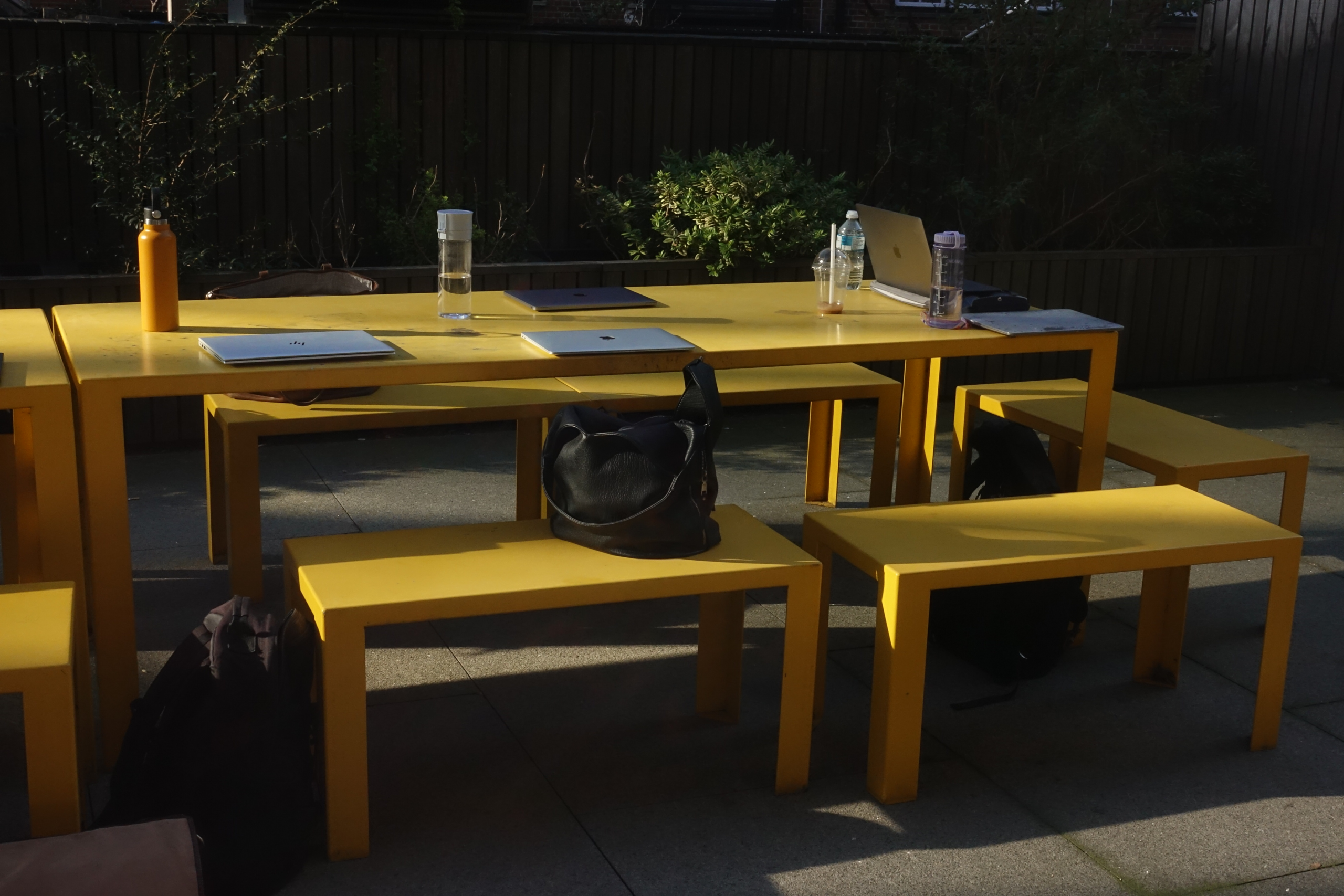
Featured Image: Table with student’s laptops. Credit: Emilie Lenglart
