

A disturbing new trend is spreading across social media. Unregulated apps are looking to cash in
Trevor Larcom was playing the video game Fortnite with friends when strangers joined, recognised him and began to mock his weight and appearance. The 22-year-old actor from California grew up struggling with his weight, reaching more than 130kg at his heaviest.
“It was really heartbreaking for me,” Larcom says through tears in a YouTube video, “how a single moment changed my life forever”. He went on to lose 60kg which led him to discover looksmaxxing – an offshoot of incel culture focused on “maximising” physical attractiveness. Once a niche digital subculture, looksmaxxing has since grown into a prolific tech-backed industry.
AI facial-rating platforms like Umax and Looksmax AI have amassed tens of millions of downloads by promising users a route to ultimate attractiveness. Users upload a selfie, which the app analyses using facial metrics such as jawline angles and overall symmetry. The software then ranks the user based on the PSL scale, named after now-defunct incel forums PUAHate, SlutHate and Lookism. Users have to pay a fee to access full details of the purported rating and AI-generated recommendations to improve their appearance.
“In my opinion, the biggest misconception by far is that looksmaxxing is synonymous with incels or extremism”
Some tech entrepreneurs are moving fast to cash in on the trend. Take Blake Andersen, the founder of Umax and multiple other looksmaxxing platforms, who turned a profit of $10m (£7.4m) across his platforms in just a year.
Others are more focused on the community itself. Dean Robertson founded looksmaxxing.com to build a platform that is “more open, useful and accessible” than when he first discovered the culture in 2018. He argues that “an app that gives you a score in 30 seconds is a very different thing from a forum […] One is a number, the other is actual conversations with like-minded people around the nuances of what someone can do to look better”.

This is a shift that Larcom recognises. “Before, people mostly got opinions from forums or social media where there was at least some human subjectivity and nuance,” he says. “AI makes it feel more clinical and absolute because it gives people a number as if attractiveness is fully objective. People naturally treat technology as authoritative.”
As looksmaxxing becomes mainstream, the line between self-improvement and harm is increasingly blurred. In April, popular American influencer Clavicular collapsed on a livestream after a near-fatal overdose. The incident came just a day after the 20-year-old, real name Braden Peters, was “outmogged” by an interviewer while appearing on 60 Minutes Australia – a term used to describe being physically eclipsed by another.
“What happened with Clavicular has definitely put the community under a microscope,” says Larcom. “I think it has made creators more aware of the responsibility they have when discussing appearance, self-worth and extreme methods.”
Clavicular is notorious for “hardmaxxing”, an extreme looksmaxxing strategy that includes bone-smashing (using a small hammer to restructure facial bones), unregulated peptide injections and surgical interventions such as limb-lengthening and jaw restructuring. He has also admitted to using methamphetamines to suppress his appetite, in the hope of maintaining a lean figure.
While public and media scrutiny of looksmaxxing surged in the wake of Clavicular’s overdose, the male beauty trend is only soaring in popularity, driving urgent conversations on safety, ideology and the regulation of technologies enabling it. Robertson acknowledges the “shared online lineage” between looksmaxxing and incel culture, but does not believe it signifies a direct correlation.
“In my opinion, the biggest misconception by far is that looksmaxxing is synonymous with incels or extremism,” says Robertson. “The reality is that the overwhelming majority of people here are just young guys who want to improve how they look – the same reason someone joins a gym or starts a skincare routine.”
Larcom agrees, arguing that “a lot of what people call looksmaxxing is just modern grooming, fitness, skincare and self-care packaged under a new internet term”.
Ben Firth, a policy researcher who leads a project for the Centre for Young Lives analysing the mental and physical harms of looksmaxxing, says that while going to the gym or keeping a healthy diet “are positive in their own right,” those engrossed in the culture can quickly fall into an ideological trap.
“[Looksmaxxing] comes from this really dark corner of the internet,” says Firth. “Red pill, black pill ideology, incel-adjacent forums that are saying things like ‘you have to look this way to get anywhere in life’.”
Other issues are also at play. “I do think the audience is getting younger, especially because TikTok and AI apps make this content incredibly accessible,” says Larcom.
“A lot of the language and a lot of the terminology is seeping into normal people’s conversations,” adds Firth. “A lot of the derogatory terms used to describe women by lookmaxxers, young people are now aware of.”
Thomas Midgley, director of The Body Image Treatment Clinic in London, warns of the impact of this trend on younger audiences. “We need to be protecting our kids because this is an unregulated, unknown space that is causing harm,” he says, pointing to AI-generated product advertisements targeting children aged as young as six.
The technology is moving at an alarming pace, leaving vulnerable demographics unprotected by policy. One of the main goals of Firth’s project, he says, is to highlight that governments across the world are lagging far behind the curve.
“Our current status of regulation and policymaking [is] always two steps behind an online trend,” Firth says. “You can’t just go around trying to identify a harm and then ban that type of content because it’s been shown not to work.”
Midgley echoes this warning, criticising the UK government’s passive “wait and see” approach to technology and its impact on children and young people.
“As a culture, we’re moving away from community and authentic relationships, which means the only way we can get our self-worth when that’s reduced is through competing and comparing,” Midgley says. “The way we’re moving forward is only going in one direction – and it’s not going to be pretty.”
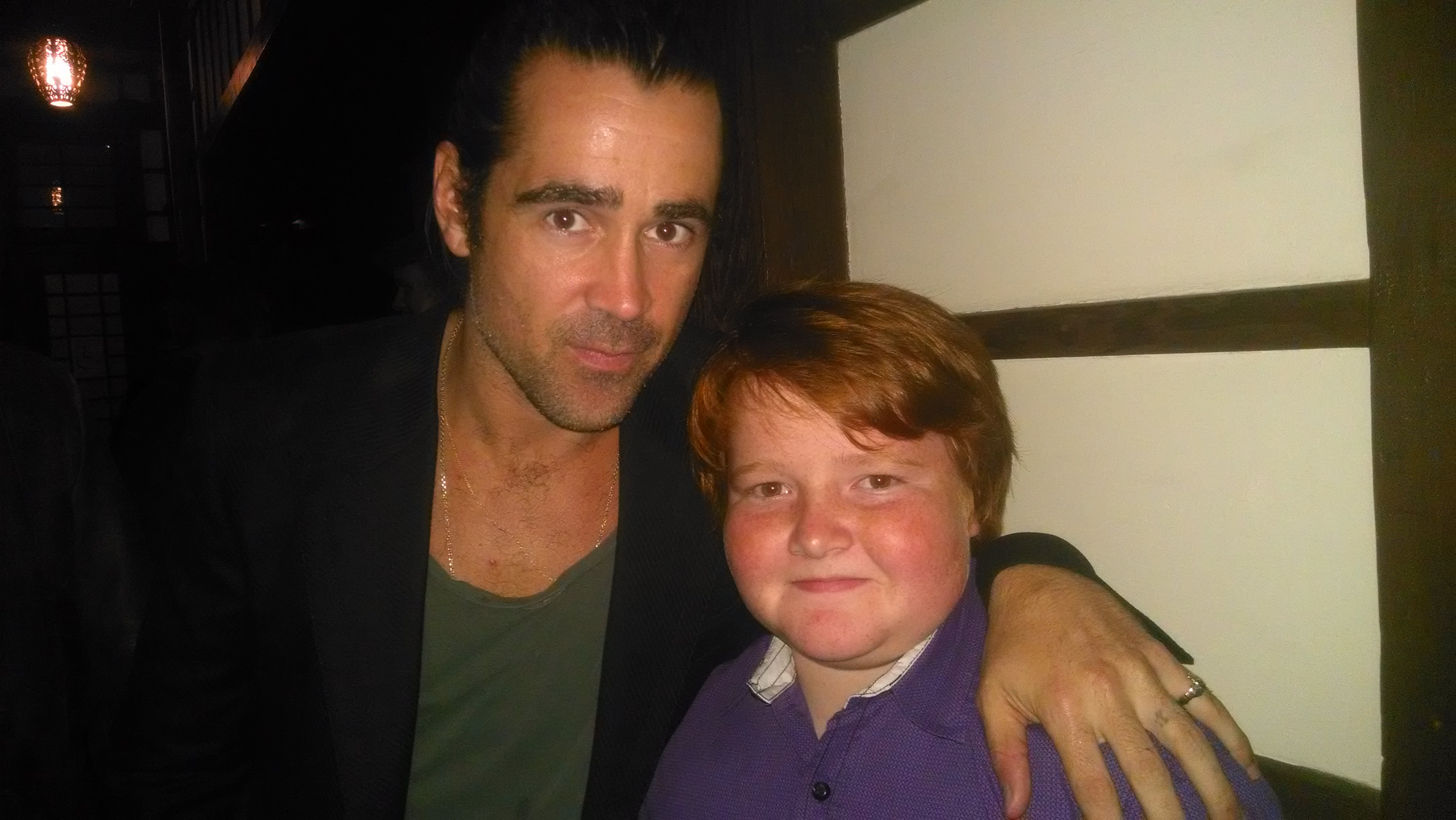
Featured Image : Trevor with Hollywood star Colin Farrell. Credit: Trevor Larcom
