

Both employers and job seekers are using AI in the hiring process, fueling mistrust on both sides
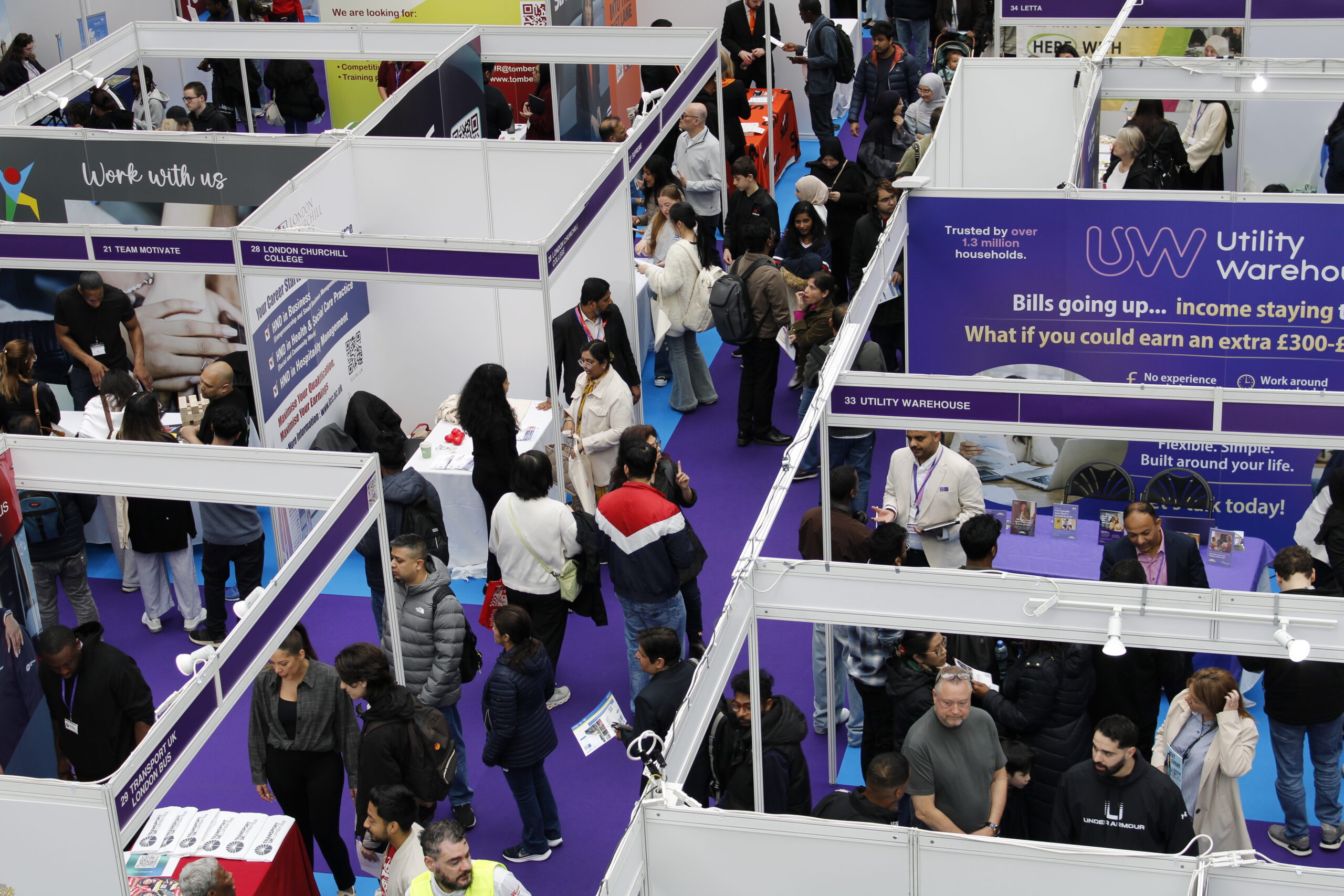
At London’s Job Fair, the biggest careers event in the city, thousands of people filled Westfield White City shopping centre, trading shopping bags for CVs and networking opportunities. The annual job fair – which hosted employers including the police force and caretaking companies – arrived at a particularly tense moment for the UK. Unemployment continues to rise, especially among young people, which is now 16.2 per cent.
Inside the crowded atrium, attendees moved between recruitment booths, scanning QR codes to submit applications and speaking directly with employers. For many job seekers, the face-to-face interactions offered something increasingly rare in modern recruitment: human contact.
Twenty-two-year-old Mary, who works in marketing, has been searching for a new job for more than a year and a half. After months of online applications, she believes that in-person networking gives her a better chance of standing out. “I find that you have more luck in person than you do online,” she says. “People can put a face to a name and an email. It just gets your foot in the door.”
The event’s popularity highlights a growing contradiction in the current hiring process. While employers increasingly rely on AI to streamline recruitment, many applications and recruiters are beginning to crave more personal interaction.
According to Keith Rosser, chair of the Better Hiring Institute, AI is not replacing the hiring system. Instead, it is exposing flaws that have long existed. “One of the problems we’ve got with hiring is it hasn’t changed enough,” says Rosser. “All we’ve done is layer technology over parts of the process that’s already broken.”
According to a 2026 report from the Institute of Student Employers, nearly one-third of employers have reported using AI in their recruitment process. With many applicants using tools such as ChatGPT to generate CVs within seconds, the number of applications has dramatically increased the number of submissions the employer has to process.
“What that’s done is almost force employers’ hands into needing to do something to deal with that,” says Rosser. “A lot of them are dealing with it by implementing AI themselves.”
According to the House of Commons Library, 729,000 people aged 16 to 24 were unemployed in March 2026; 110,000 more than the previous year. The unemployment rate for young people has increased by two per cent from 2025.
For recruiters, the flood of applications has become overwhelming.
“Companies are drowning,” says Richard Carruthers, deputy director of Careers Service at Imperial College London. “What used to be 8,000 applications is now 100,000 plus.”
To help counter the growing volume, many companies use AI filters to identify key words in applications, and some have even begun deploying AI-led screening interviews before candidates ever speak to a human recruiter.
Officially, companies insist humans remain involved in final decisions. But Carruthers suspects that many organisations rely more heavily on automation than they publicly admit.
“There’s a huge question mark around how much humans are actually viewing,” he says. “If you’ve got 10,000 video interviews, are you really watching every single one?”
For Rosser, the growing use of AI has created what he describes as a widening “trust gap” between employers and applicants. “Neither side seems to be trusting each other very much,” he explains. “In fact, they’re trusting each other less.”
That mistrust is reshaping the hiring process itself. Applicants increasingly question whether humans are reviewing their applications at all, while employers struggle to determine whether submissions genuinely reflect a candidate’s abilities.
For job seekers, the emotional toll is becoming increasingly difficult to ignore. Carruthers believes the removal of human interaction from recruitment is contributing to anxiety, burnout and distrust among applicants.
“The amount of ghosting, the instant rejections, the unknown; it’s having a huge negative impact on mental health,” he says.
“The amount of ghosting, the instant rejections, the unknown; it’s having a huge negative impact on mental health”
Rosser says the lack of communication has become particularly damaging for younger applicants entering the workforce. Last year, during a parliamentary discussion on hiring reform, one student union president described modern recruitment bluntly: “The selection process is a rejection process for young people because that’s just how it feels.”
Rosser and the Better Hiring Institute have called for greater transparency from employers using AI in recruitment, including disclosing when automated systems are being used to assess candidates. “Employers should declare on job adverts and through the process if AI is going to be used to review or select work seekers,” he says.
Ironically, the rise of AI may be pushing recruitment back toward human interaction. After the COVID-19 pandemic moved networking and hiring almost entirely online, many employers are once again prioritising in-person events to assess qualities algorithms struggle to measure.
Ashley Johnson, a senior recruitment advisor for Future Connect Training Institute at the West London job fair, says in-person events often expose people to industries they may never have previously considered.


“You might walk past something and think, ‘I’ve never had an interest in that’, but then you speak to someone about it and suddenly think, ‘Actually, I could be good at this’,” he says. “That’s where events like this really come in handy.”
The future of recruitment remains uncertain. Carruthers hopes companies will become more transparent about how they use AI in hiring, particularly as applicants grow increasingly suspicious of hidden algorithms and automated scoring systems. “If companies just wanted machines, they’d buy software,” he says. “They’re hiring humans.”
“If companies just wanted machines, they’d buy software”
For now, recruitment remains caught in an uneasy transition. Employers want efficiency, applicants want visibility, and both sides increasingly distrust the systems designed to connect them.
“We still think AI has got a huge future – positive or negative – to play in how we hire in future,” says Rosser. “We’re very much in that formative stage at the moment.”
In the middle of an AI-driven hiring arms race, the qualities recruiters still claim to value most – empathy, communication and authenticity – may be the very things technology struggles to replicate.
Featured image: Westfield White City annual job fair. Credit: Rachel Schmid
