

With all eyes on technological advancement, some older adults are left to struggle in an increasingly digital world
Louise Wright has a paralysed leg and a heart problem, but the 63-year-old gardener hasn’t been able to get a doctor’s appointment for four years – all because she doesn’t know how to book an appointment online.
“I just can’t keep up with the speed of everything going on,” Wright sighs. Staff told her that she couldn’t get a time slot by phone or visiting the surgery. She says she was good with word processors and graphic design tools, but she now feels left behind by the rapid pace of technology.
Wright’s case is not rare. A report published by the charity Re-engage in April found that one-third of people 75 and older could only book their NHS appointments online, and that they felt isolated from care. Another charity, Age UK, reported that 4.7 million people aged 65 and over lack the skills to use the internet “successfully and safely”. In an increasingly digital world, where services are moving online, these digitally excluded older people are at risk.
Harpal, a 70-year-old resident of Hackney, east London, has strong feelings about it. She is distressed that she cannot speak with a real person when she has concerns about her energy bill and when she manages her finances. “I feel my capacity is being taken away. I’m completely frozen, and I have to wait for my daughter, when she has time, to help me,” she says. Sometimes she has to wait for weeks, but still cannot get a tutorial from her busy daughter. “She just does it for me. I feel embarrassed.”
“I feel my capacity is being taken away. I’m completely frozen, and I have to wait for my daughter, when she has time, to help me”

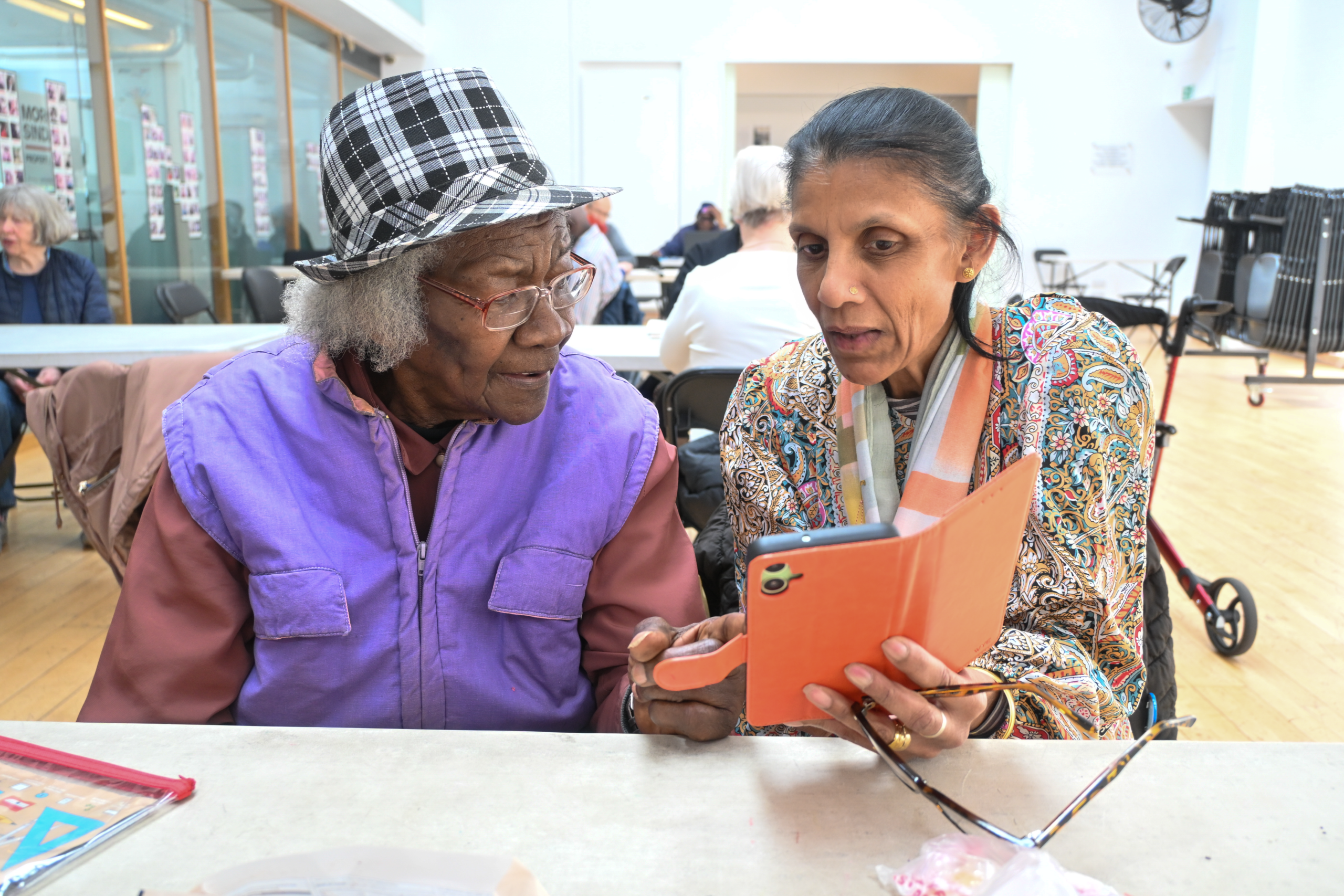
She is keen to learn technology and do things herself, so she attends the 50+ Digital weekly drop-in session at Mildmay Community Centre, where people can ask any questions they have about technology. Volunteers previously taught her how to use the NHS app, and she now feels empowered to check her test results online and follow up with medical professionals herself.
The drop-in events are organised by Rick Crust, the digital inclusion lead at MRS Independent Living, a nonprofit for disadvantaged and socially excluded communities. The 78-year-old has been in the digital technology world since 1996, witnessing the evolution from the World Wide Web to AI. He says the current trend of “digital by default” across many services, from councils and housing to applying for London’s Freedom Pass – a concessionary travel card for those over 66 or with disabilities – can create trouble for older people. “They are just completely lost at sea and drowning,” he says. “[The] introduction of AI into everything will mark a tipping point, for when things were bad, into which they become totally unacceptable.” He says new digital technology is not exciting for many older adults at all; it is instead a threat that people deeply resent.
Crust warns that older people who were confident online are now easy targets for scammers – their habits have not changed, but the technology has. That is why some organisations also run online safety classes for older adults, including Digital Skills Education based in Glasgow.
Project manager Kirstie Steele shares that their cybersecurity courses are always popular. She observes that many of their senior students are more sceptical of new technology than the younger generation. In fact, both Harpal and Wright express feelings of insecurity and mistrust toward AI.
“I see everything with a suspicious eye now,” says Harpal, with Wright adding that “I don’t want AI telling me what to do […] I don’t trust it”.
As the digitally savvy generation gets older, will the digital divide diminish? Crust firmly objects: “Twenty years ago, the technology people had to deal with was different from what it is now. It’s never stopped changing.” The drop-in project has run for 21 years, and demand is only increasing. The service is now expanding to another location in the city, hoping to serve more older adults struggling in an ever-changing world.
Featured Image: Volunteer teaches participant how to use Whatsapp. Credit: Joyce Lai
