

Across the UK, centuries-old bar games from darts to pool are being transformed into high-tech social experiences
Under the pink and blue neon lights of Boom Battle Bar near Liverpool Street in London, traditional pub dartboards make way for flashing digital scores and animated puzzles.
Just a short walk away at nearby Poolhouse, there are no 20th-century pool sharks to be found, despite the retro decor inspired by vintage Las Vegas casinos. Instead the billiard tables are clothed in AI-powered projections that map out a player’s next best move, giving even the worst players a fighting chance at victory.
Both venues represent the next step in the competitive socialising sector – a leisure trend where traditional hospitality is traded in for interactive high-tech games, fuelled by the rising post-pandemic demand for in-person activities.
Boom Battle Bar general manager Mia Kathleen argues that the tech-driven experience at the venues fosters human connection and creates a more diverse and inclusive space for its patrons.
“I think it’s more user-friendly for those that aren’t good at darts. We have kids that are more interested in it and I find a lot more females interested in it because traditionally darts is more of a male-dominated sport,” says Kathleen.
“When I walk into a pub and ask to play darts, they’ll just give a set and then you’ve got no idea what you’re doing,” she adds. “We have hosts that teach you how to play everything that you come in for. We don’t just hand you equipment.”
Venues such as Poolhouse say they also aim to bring inclusivity to their crowds. The company writes on their website that their “AI-powered tables and games adapt in real time to your skill level, levelling the playing field so everyone’s got a shot at glory”. Its CEO Andrew O’Brien hails the experience as “the most significant transformation in the history of a near 700-year-old sport”.
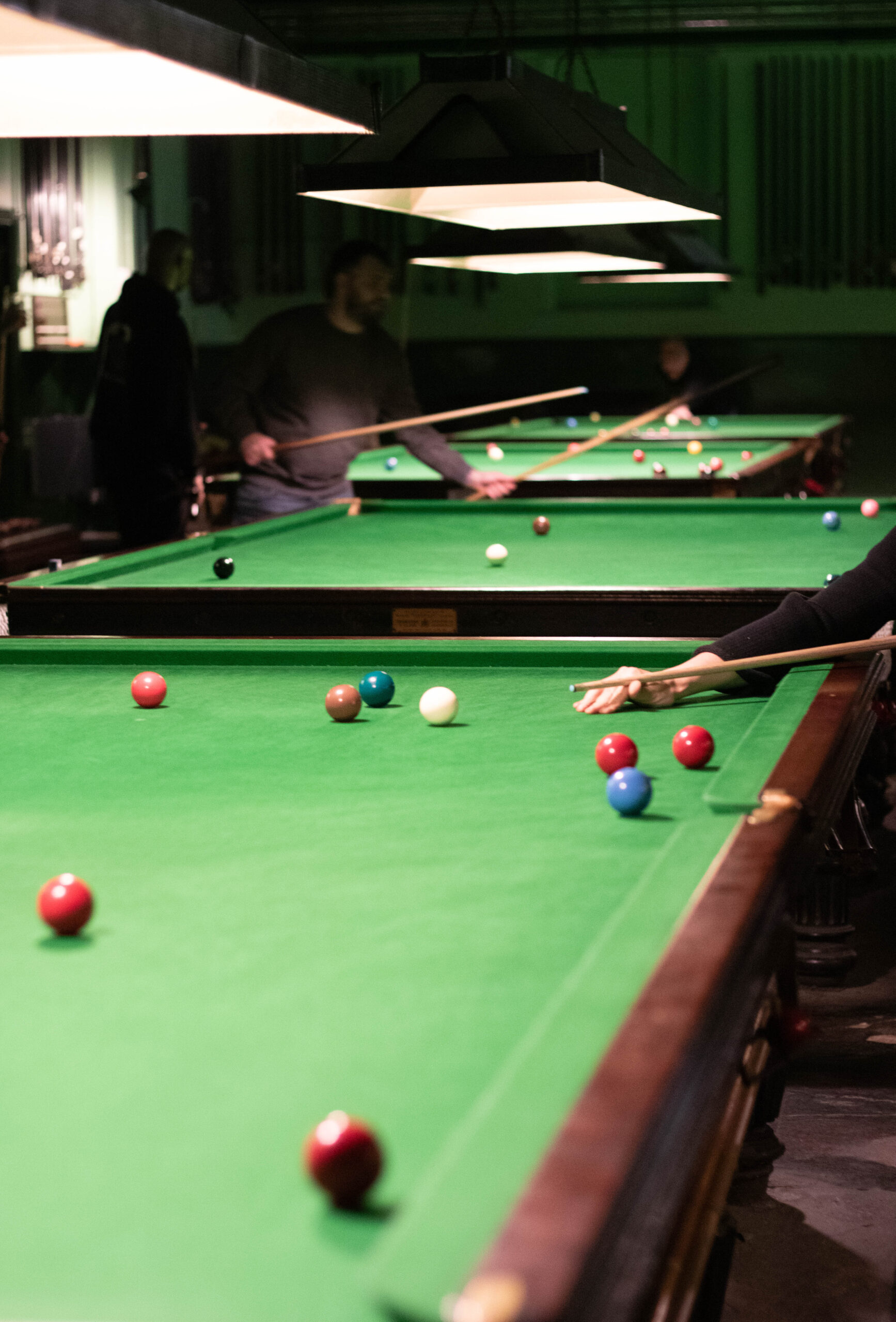
Not all bar sports venues are embracing the winds of change. At the Mildmay Club in Stoke Newington, part of the rich history of snooker is preserved in a nine-table Victorian hall, which stands as one of the oldest of its kind. Originally founded in 1888, the club’s interior is Grade II listed, its low ceilings, block columns and working jukebox acting as a permanent mid-century time capsule.
“It feels like a safe community space, and digital darts doesn’t come into it,” says Dan Isaacs, who has volunteered as the club’s treasurer for the past eight years. Despite its traditional roots, the club is dedicated to inclusivity and community.
“We have a snooker coach that comes and teaches people how to play. We [support] Women’s Day snooker and young kids’ snooker,” Isaacs adds. “There are some people who play every day and love it, but there’s enough space in there, enough tables for anybody.”
One of those new players is Quan Chen, who arrived at the club’s snooker hall “looking for a sense of community”.
“I wanted a dim place to gossip with friends. Talking is as important as the game for me,” Chen says. “The darkness seems to absorb the emotional intensity [of a conversation] compared to a hyperactive place.”
According to Savills, competitive socialising has enjoyed a market growth of 58 per cent since 2018, with over 800 sites now operating across the UK, although corporate giants are consuming a disproportionate share of that growth. Independent operators now make up less than 40 per cent of the market, leaving traditional spaces like the Mildmay to compete against big-city leisure venues like Poolhouse and Boom Battle Bar. As Isaacs warns: “The bar staff that you can see behind you […] if we run out of business, they lose their jobs.”
For now, the Mildmay continues to hold its own. Yet, as rapid technological innovations push the competitive socialising sector towards a projected £1.2bn UK market value by next year, London’s leisure landscape is becoming more and more high-tech. What remains is how Londoners want to spend their Friday evening: at a local pub over felt-green billiards, or under the glowing neon lights of a digital playground.
Featured image credit: Solaya Huang
