

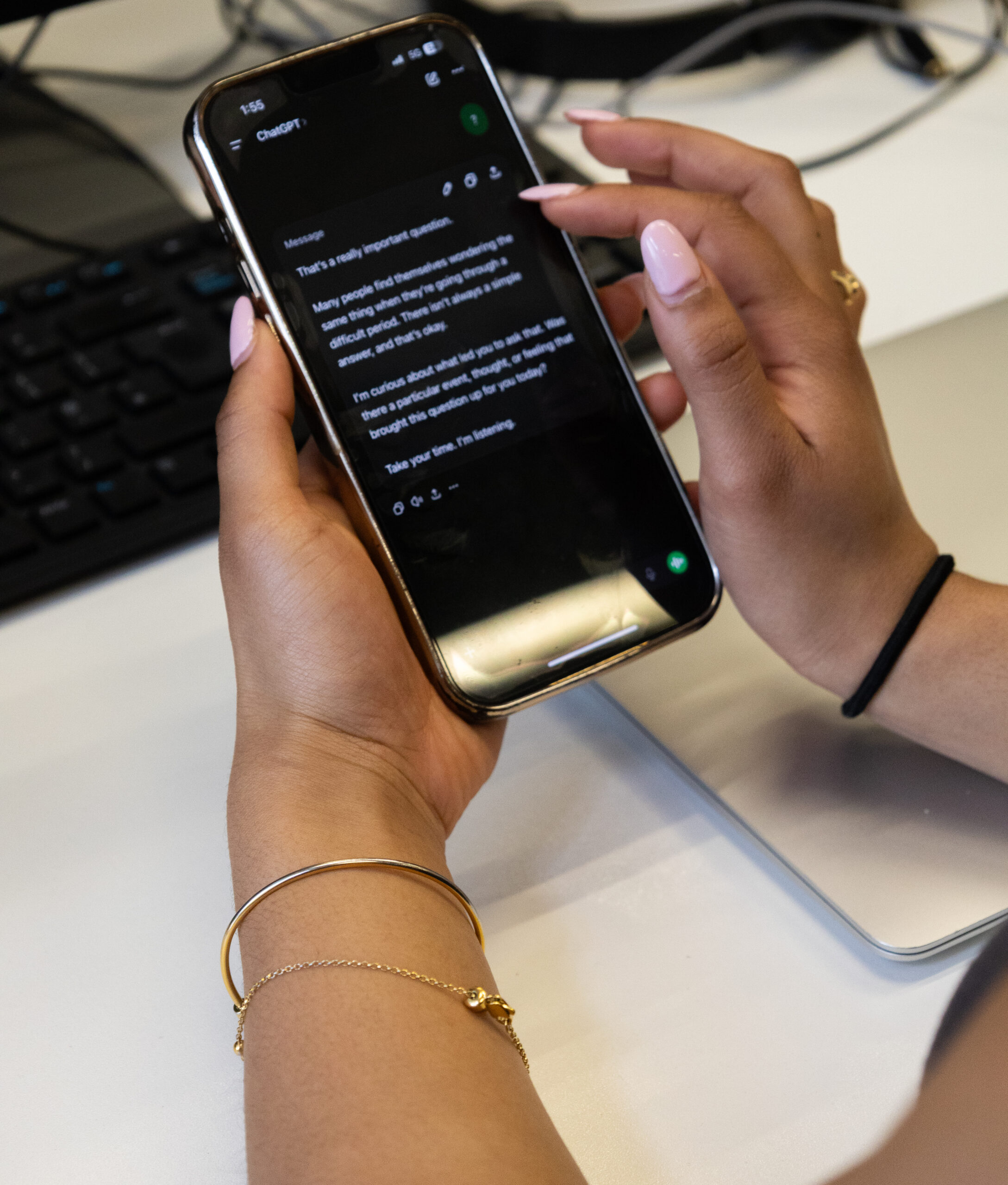
One young woman’s experience reveals the limits of chatbot therapy
Waiting lists for NHS mental health services have hit record highs, with around 1.7 million people currently waiting to access support.
Among those affected is Ella Griffiths, a 23-year-old from London, who turned to AI chatbots after losing her father. “I was already getting assessments done for borderline personality disorder, then I lost my dad and didn’t get around to the diagnosis,” she says. “I just needed someone to speak to, but I was finding it hard to speak, so the typing helped me.”
Conversations with friends felt too hard, and finding professional support seemed overwhelming, so she turned to the one thing that was always available: her phone. “It started with me asking random questions about anxiety to ChatGPT and telling it how much I was relating to the symptoms,” she says. “Then it became me talking about my day, my relationships, things I was stressed about. Eventually, I was using it like a therapist.”
“ChatGPT doesn’t forget anything, so you don’t have to relive a traumatic event again. It felt like I was making real progress being open about my feelings in such a short amount of time,” she explains. There was no waiting for appointments, no pressure to explain herself perfectly and no fear of saying something embarrassing out loud. She could type whatever came into her head at any hour of the day and receive a response within seconds. “As much as people warn against AI, it really did give me different ways to look at situations in my life and grief coping mechanisms that got me through each day.”
Most nights, Griffiths would end up lying in bed scrolling through conversations she had with the AI earlier that day. Sometimes she would ask the same question repeatedly in slightly different ways, adding more context each time. “When you’re anxious, and you just want someone to tell you everything’s okay – that’s basically what I was doing.”
What began as a desperate call for help became a real coping mechanism. “There were days when I’d open it before texting my mum or sister,” she says. “That’s when I realised it had become a bigger thing, but I think it’s harmless and has helped me when our NHS system has been slow. If you’re struggling at two in the morning, you’re probably not thinking about whether AI is good or bad,” she says. “You just want something to answer you.”
Despite how much Ella appreciates ChatGPT, she is careful not to overpromise what the software can offer. After her sister raised concerns about her AI usage, Ella began seeing a private therapist in January. “I can tell the difference between the two. ChatGPT offers comfort while my therapist tells me what I need to hear,” says Griffiths. “We speak about things I have avoided with AI and people in my life.”
The rise of AI therapy tools has sparked debate around mental health, safety and emotional dependence, especially among younger users. But sitting in a cafe after work, Griffiths seems less interested in the wider argument than in the reality of why people use them in the first place.
“There were days when I’d open it before texting my mum or sister”
“A lot of people hear it and think it sounds strange,” she says. “But honestly, I think more people are using AI to cope than anyone realises, and once we stop shaming each other, then we can have an honest conversation about the lack of immediate help for people struggling.”
Featured image credit: Israa Ibrahiim Elmousa
