

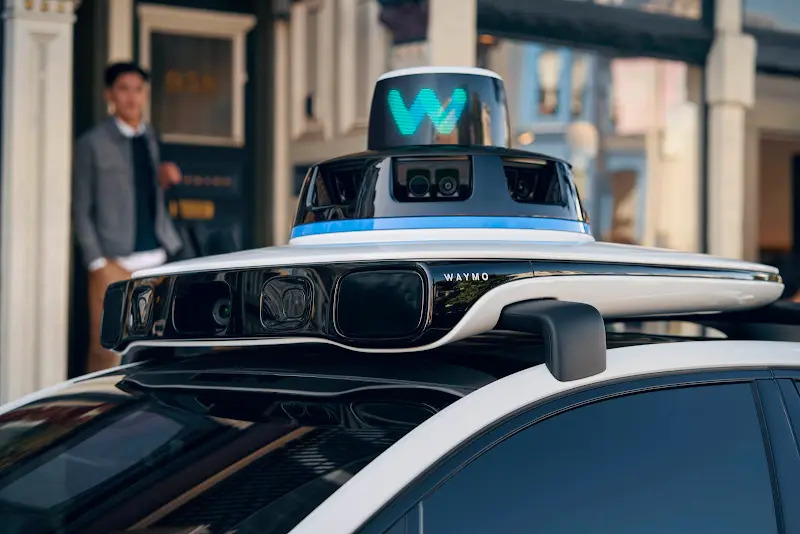
As robotaxis prepare to roll out in September, early mapping tests have already exposed a raft of challenges. Experts warn regulation may not be ready in time
Waymos have hit the streets of London, mapping the city for their official September arrival. But the robotaxis have experienced a few pitfalls.
In Shoreditch, a Waymo kept getting stuck at a dead-end street, waking residents in the early hours with loud, blasting reversing alarms. Elsewhere in Harlesden, a Waymo drove into an active police investigation with a validation driver in full control.
The concerns are not London’s alone. Across the Atlantic, where Waymo operates on the west coast, the cars have driven into flooded areas, stopped on train tracks and been involved in accidents.
Chris Riotta-Rogers, a technology journalist based in San Francisco, says he was in a Waymo when it pulled into oncoming traffic. The human driver in the other car swerved to avoid the Waymo.
“It was 100 per cent Waymo’s fault,” he says. “The human driver actually was great, and saved us from getting into a car accident. I don’t think any Uber driver or human driver would have made the same mistake that Waymo made.”
Waymo did not respond to requests for comment.
In early May, Waymo recalled over 3,000 vehicles in Texas after a car was swept into a creek, exposing a software flaw that could allow vehicles to enter flooded streets.
Nick Reed, an expert in autonomous vehicles and founder of Reed Mobility, a consultancy for automated vehicles, says London should take those concerns seriously. “Flooding is not unknown on London roads,” he says, “so there’s definitely something to think about there.”
The regulatory picture is no clearer. The UK set a framework in 2024 for fully autonomous vehicles to operate on public roads from 2026, but the standards they must meet remain open to interpretation, and further regulations are still being implemented.
Reed says the core problem is defining what good driving actually looks like.
“There’s no prescriptive specification of what careful and competent driving is,” he says. “So how does an automated vehicle developer come up with something that looks like it’s careful and competent?”
A spokesperson for Transport for London (TfL) says it is closely monitoring the framework as the legislation passes through parliament.
“TfL recognises the challenge of legislating in response to changes in automated vehicle technology promptly to ensure benefits are delivered and risks are mitigated,” the spokesperson said. “Legislation must set a high benchmark and consider the impact on all road users.”
Insurance law adds another layer of complexity. Under the 2018 Autonomous and Electric Vehicles Act, any autonomous vehicle (AV) operating in the UK must carry insurance, giving injured parties a route to compensation. But Paul Armstrong, an industry leader in AVs and founder of consultancy firm TBD Group, says the regulation will need to go further.
“Traditional insurance models were built around human fault,” he says. “Autonomous vehicles shift responsibility toward product liability and system accountability instead.”
Reed sees a potential upside in the data these vehicles generate. Unlike conventional crashes, which can come down to one driver’s word against another’s, AV collisions generate extensive data.
“We should be able to determine liability more effectively than we can today,” he says. “It can be more objective.”
Getting the balance right will require collaboration between government, corporations, local authorities and the public. Armstrong notes that every visible failure deepens scepticism among those who already see the technology rollout as premature. Reed, however, remains cautiously optimistic about what AVs could ultimately deliver: safer transportation for Londoners.
“It’s a really exciting time,” he says. “Having vehicles that are more cautious around vulnerable road users might be a huge step forward in progress.”
Featured image credit: Waymo
