

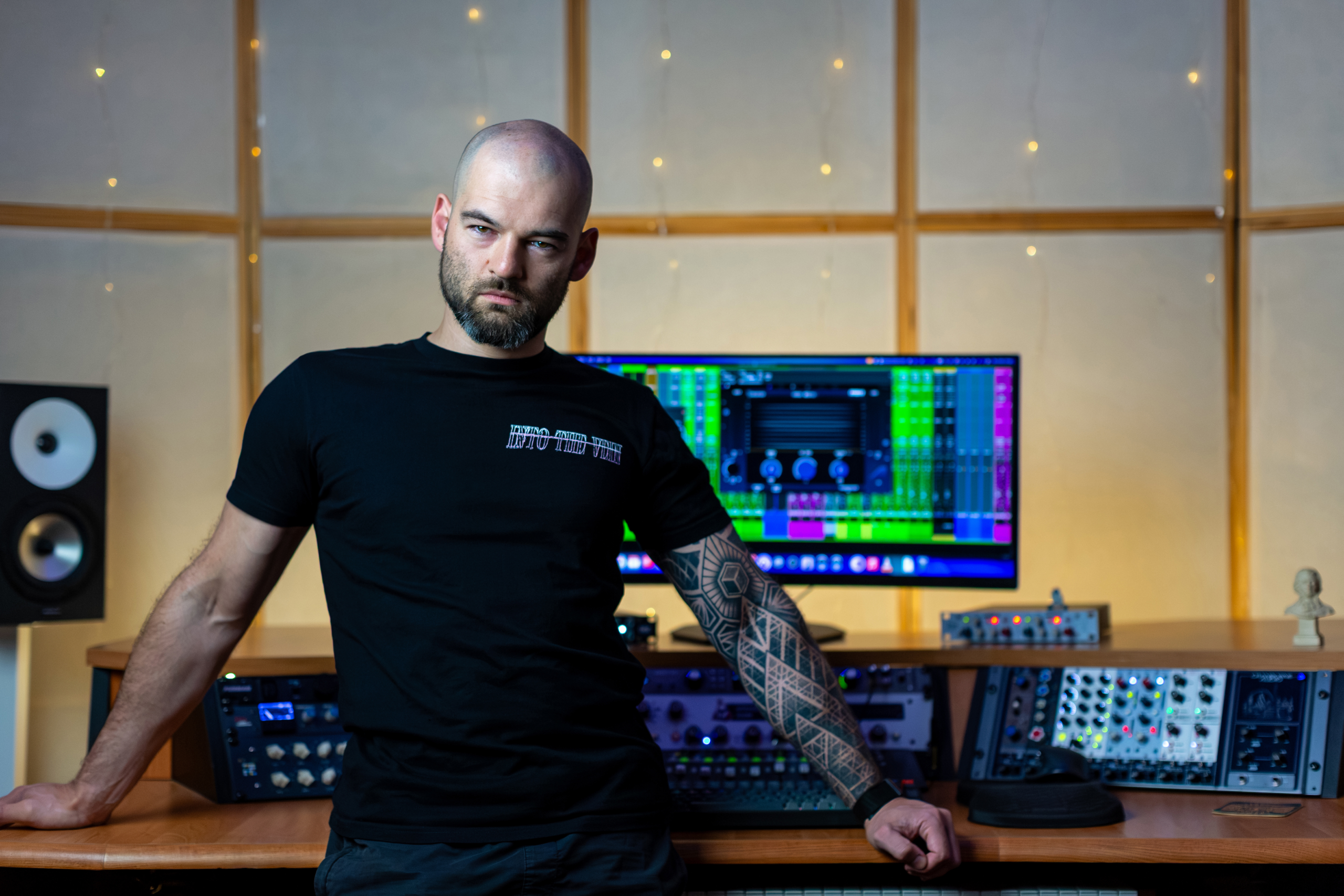
Leading music producer Dr Mike Trubetskov on whether generative tools belong in the recording studio
When clients started sending Dr Mike Trubetskov AI-generated songs to recreate with real instruments, he found himself confronting a dilemma familiar to many modern musicians: should he turn down the work or abandon his longstanding principles? He took the work.
“The genre is competitive and it’s a challenge for producers to find enough clients,” says Trubetskov from his studio in Melbourne, Australia. “I’m not the songwriter. I’m not responsible for the idea of the song itself. I’m only responsible for helping my client get from point A to point B.”
The songs in question were generated using Suno, an AI platform capable of creating music from a simple text prompt. The US-based startup, recently valued at over $5bn, sits at the heart of a debate Trubetskov has spent considerable time thinking about and discussing publicly. His YouTube channel recently featured a video titled How to Use AI in Metal Music (Without Letting It Replace You).
“The main issue is the question: who is the songwriter?” he says. “Who holds the intellectual property rights? Because it’s not solely a human creation anymore. You could argue that it isn’t really music, because music is a human interaction between people and this is just output from a database.”
The path Trubetskov took to the studio was anything but conventional. Born in Russia, he moved to Australia as a scientist, earning a PhD in biochemistry before his music career took centre stage.
“It’s not solely a human creation anymore.”
“The analytical skills I built in science, I can still apply in the music world today,” he says. That scientific background also helped him build the studio from which he now records and produces music.
Heavy metal has been a constant in his life. Trubetskov fell in love with the genre aged 13 and played guitar in groove metal band Gift of Madness, recording and touring with metalcore heavyweights Killswitch Engage before eventually heading Down Under.
Despite his reservations about fully AI-generated music, Trubetskov is not opposed to the technology. He draws a clear distinction between AI as a finished product and AI as a creative tool. Used carefully, he argues, it can help musicians escape the agony of writer’s block, sketch a chord progression or offer a basic structure that a songwriter can develop into something of their own.
“I would not dismiss the possibility of someone submitting a rough idea to Suno just to see what comes back but then recreate it with real instruments,” he says. “Make the final product entirely human, even if AI helped spark it.”
It is an admittedly nuanced position, but one he holds firmly. While he still tries to steer clients away from fully AI-generated songs where possible, he sees value in using the technology to support creativity rather than replace it.
“I’d much rather see AI as a helper for more mundane tasks,” he says. “Finding a scale, working out chords – that kind of thing. Not replacing the human at the centre of it all.”
As AI music tools continue to develop, that centre may become harder to define. For Trubetskov, the real question is not what the technology is capable of creating, but how musicians choose to use it.
Featured Image: Dr Mike Trubetskov. Credit: Valentin Zhmodikov
