

With NHS wait times soaring, more people are relying on AI for medical advice – with mixed results
Whenever Otis feels that something is wrong, his first port of call is to consult AI. “The AI chatbot helps me build my own understanding first, which is essential for asking the right questions to the medical professional later,” says Otis, who is using a pseudonym to protect his privacy.
He adds that AI is a “free and highly efficient way of taking care of my mental and emotional fitness”. As appointment waiting times increase and the price of non-NHS care soars, “paying to stay healthy has become a luxury”.
But this supposed efficiency could be causing people to seek unnecessary medical help, according to new research from AXA Health, the second-largest health insurer in the UK. The survey found that users of AI health services, specifically symptom checkers, were twice as likely as non-users to pursue medical care they later discovered they did not need.
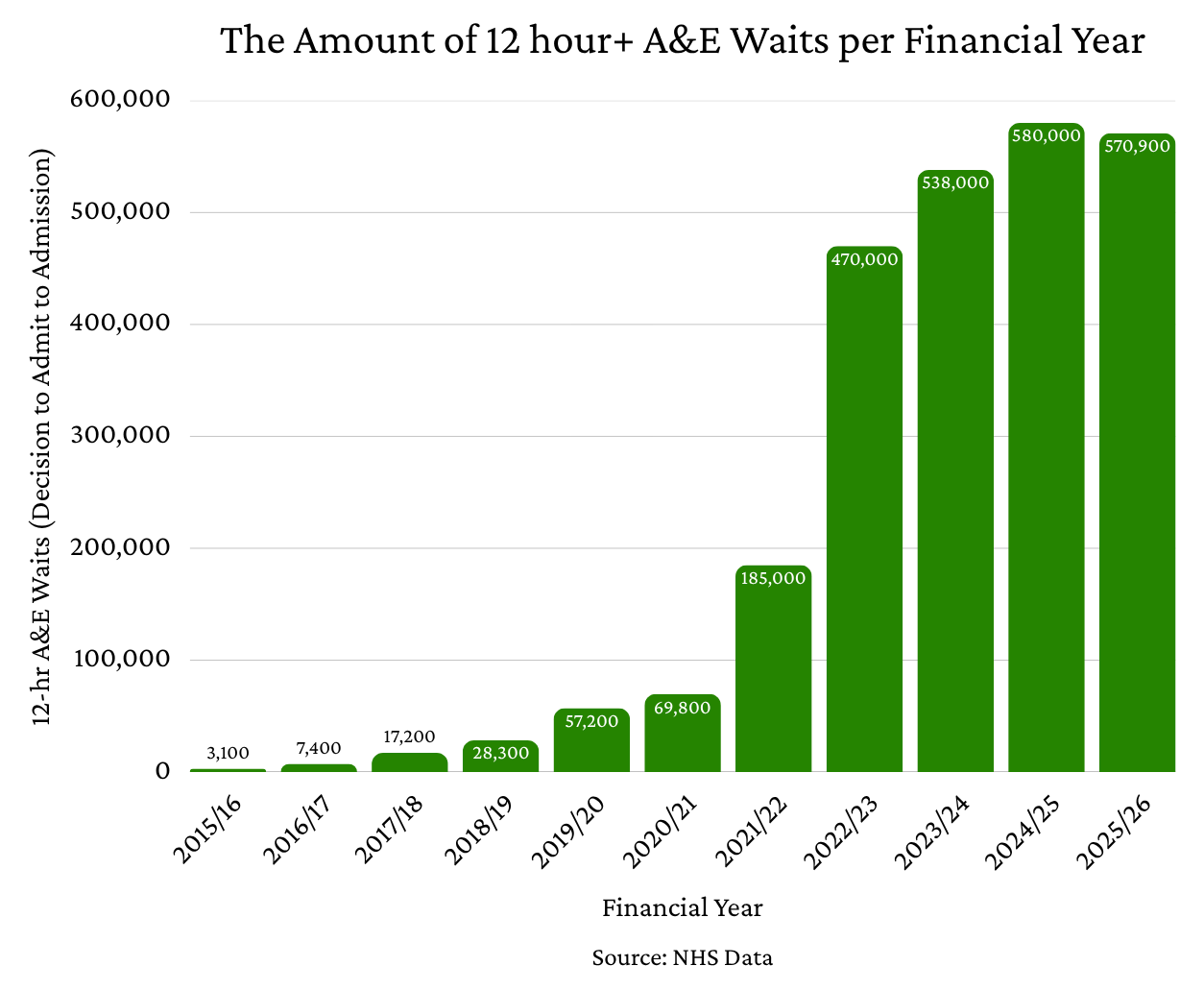
This surge in unrequired appointments comes at a time when the NHS is under significant strain. Recent NHS data found that the amount of 12-hour-plus A&E wait times hit record highs this January of 71,517 patients (despite an overall decrease in the 2025/26 financial year, compared to 2024/25).

While AI health services originally aimed to help reduce numbers like these, they may inadvertently be increasing them. Unlike human clinicians, AI health apps operate without access to full patient records, meaning their advice often misses individual nuance and provides misleading guidance.
It is this misleading guidance that Tara Akyaa-Sarpong, a specialist nurse for children’s safeguarding at North Middlesex University Hospital, believes is amplifying this strain on health services – though she understands why people turn to these sources for help.
“[It is a result of] people not being able to get GP appointments,” she says, pointing to the number of people who go to A&E with symptoms like “fevers, things that your primary GP could see”. While someone may have to wait months for a GP appointment, AI is there at every moment.
Many AI health apps are based on existing LLMs. One example of this is DxGPT, an AI symptom checker, which is entirely based on OpenAI’s GPT-4, one of the LLMs that powers ChatGPT.
But general-purpose LLMs aren’t “built to manage” complicated health issues, explains Praharsh Bhatt, the cofounder of AI therapy platform Renée Space. “When people use them for health decisions, the results reflect that,” he says.
In development, human reviewers reward clear and decisive answers better than cautious, uncertain ones. Reinforcement learning from human feedback (RLHF), as it’s called, means that LLMs are programmed to provide the answer the human would prefer. In essence, the AI is trained to be a people pleaser.
While this may work with general queries, it is dangerous for healthcare issues, Bhatt says. When a doctor may say “monitor it, and if it gets worse get help”, an AI model will jump to “seek help immediately” because that is the most decisive answer, even when it is not the medically correct one.
Bhatt’s service runs on a specially coded chatbot that specialises in medical advice. Humans are also on standby if it starts to provide poor guidance. “Specialised agents monitor how a conversation evolves,” he says. “Agents [can] step in and reset the tone [of the conversation].” Some users, he explains, try to steer the chatbot to answer in certain ways, requiring human intervention – an approach that he says “works well in our testing”. Such guard rails are not in place for other AI health services.
The NHS is already grappling with long wait times – and the rising use of AI isn’t helping. Born to fill a need for a quick health solution, chatbots like the one Otis uses may be doing more harm than good.
