

An Oxford theologian has praised the pope’s AI stance
Pope Leo XIV’s warning about the “prospect of greater poverty and inequality” as a result of unregulated AI in his first papal encyclical grabbed the headlines on Monday, but an Oxford theologian and AI researcher said the document also contained positives.
Dr Lyndon Drake, a chaplain and research fellow in AI at the University of Oxford, said: “The encyclical also has a very constructive and positive analysis of technological development and of the positive affordances of AI systems – it’s a constructive vision of how this can lead to human flourishing. Part of that constructive vision, of course, involves attending to risk.”
Drake praised the encyclical’s aims and said it showed the Vatican is, under its first American pope, well equipped to answer questions surrounding new technologies.
Read more: AI images Of UK civil war flood social media after Unite The Kingdom
Read more: TFL rebuffs calls for autonomous trains before latest strikes

Without bold decisions, the prospect of greater poverty and inequality looms large
“What the pope’s done is more sophisticated than just publicly addressing ethical risks. It’s a very complex and sophisticated document that shows really close engagement with the science,” he added.
A papal encyclical is a letter from the pontiff to the church on major social issues. Leo’s letter, presented alongside Anthropic co-founder Christopher Olah, focuses on the safeguarding of human dignity in the time of artificial intelligence.
It emphasised, among other things, the need for AI development to be subject to rigorous ethical constraints, government regulation of AI companies, and protection for workers whose jobs are threatened.
The encyclical comes at a time when the UK public is more fearful than hopeful for AI’s effects on the future of work.
A recent study conducted by Kings College London, found that seven in ten people are worried about AI’s economic impacts, and six in ten think it will eliminate more jobs than it creates.
Leo echoed these concerns, writing:
“Without bold decisions, the prospect of greater poverty and inequality looms large, which would leave many individuals marginalised, stranded and surrounded by the machines and automated systems that have replaced them.”
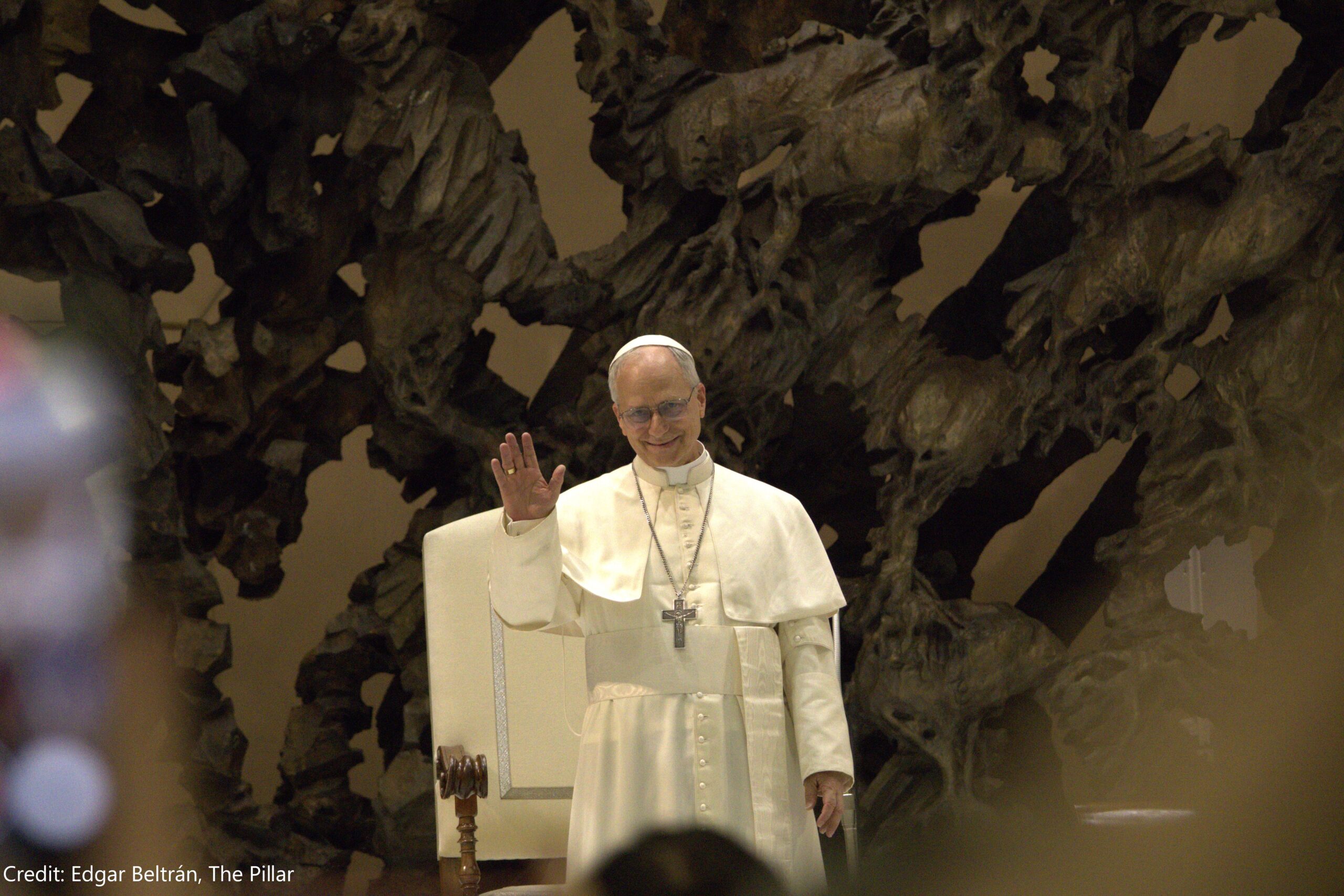
Featured image credit: Edgar Beltrán.
