

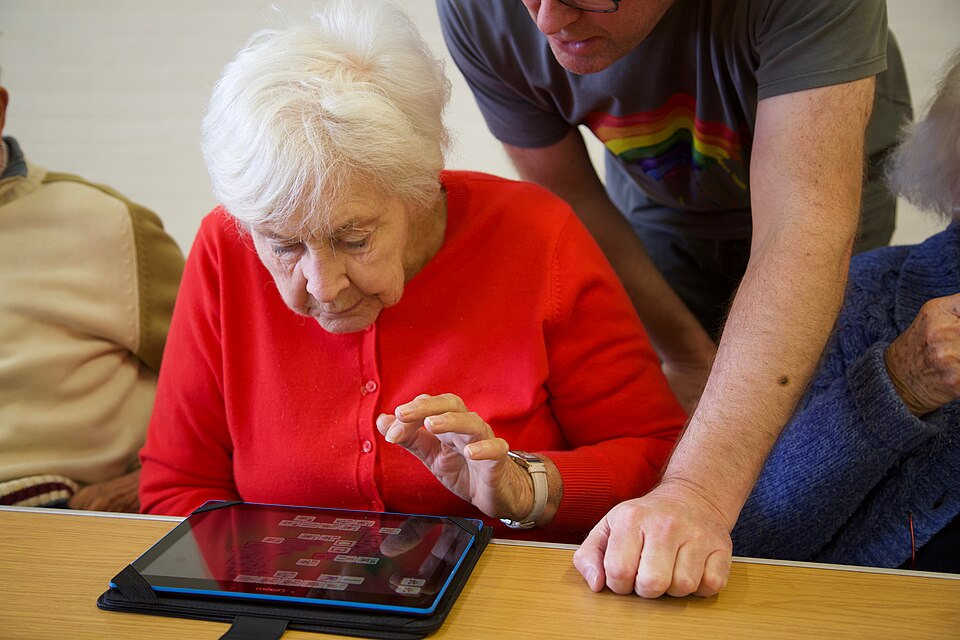
A new government fund promises to change the system from the ground up. For families already stretched to breaking point, the question is whether help will arrive in time.
For many families, dementia care does not happen in hospitals or care homes. It happens in living rooms, in kitchens at three in the morning, and in the exhausted calculations of unpaid carers trying to be in two places at once. According to the Alzheimer’s Society, around 900,000 people in the UK are currently living with dementia, and the vast majority are cared for at home by family members who receive little formal support.
Maya, who does not want to disclose her full name, knows this reality well. She is a full-time carer for a 73-year-old dementia patient in South Croydon, a role she has held for the past three years. Now pushing 40, she carries the quiet weight of a job with no shift patterns, no colleagues to hand over to, and no easy answers.
“Sometimes when I’m not in the same room or using the toilet, there is absolutely no way to keep an eye on them,” she says. “An automated sensor or a video surveillance system would make my job easier.”
Her situation is not unusual. As the population ages and NHS resources remain stretched, the pressure on unpaid carers is expected to grow significantly in the coming years. And yet the tools that could ease that burden – including wearable movement monitors, AI-assisted medication dispensers and cognitive tracking apps – remain largely out of reach for families navigating the system without specialist guidance or financial support.
Dr Rashmi Gaekwad, a GP in Kent, sees the consequences of a system under pressure every day. “We often use tech and AI in the medical field,” she says, “but it is used in a way that is directly useful and gives immediate results, like an MRI machine. However, even though there have been advancements in the caregiving sector, it still hasn’t reached the point where we are directly using it for dementia and Alzheimer’s in the UK.”
Her words land with particular weight when you consider the scale of what Britain is facing. According to NHS England, there are currently over 512,000 patients with a recorded diagnosis of Alzheimer’s in England alone, and that figure is rising steadily. Across the UK as a whole, that number is projected to climb to 1.4 million by 2040, based on projections published by the Dementia Statistics Hub. According to data from the Healthcare Quality Improvement Partnership, one in four acute hospital beds in England is currently occupied by a person with dementia, placing unsustainable strain on a health service already running close to its limits.
“What we are trying to do is change the fundamental architecture of how dementia care is delivered in this country”
The technology to support home-based dementia care is not science fiction. It exists, and in some settings it is already making a meaningful difference.
Wearable devices can monitor movement patterns throughout the day and night, alerting carers when something shifts – for instance, such as a person who usually sleeps until six beginning to rise after midnight.
Automated pill dispensers can release correct doses at the correct time and flag when medication has not been taken. Smartphone apps can run regular memory and reasoning checks, picking up subtle cognitive changes between GP appointments that a single annual assessment might miss entirely. AI-supported conversational tools – such as MindMate, which has 45,000 active users in the UK and US – can respond to repeated questions and provide gentle reminders to someone sitting alone for long stretches of the day.
The government has committed up to £5m towards a Dementia Patient Flow Research and Innovation Challenge, as part of a wider multi-year programme backed by £500m announced in Spending Review, according to the Department of Science, Innovation and Technology.
The initiative is aimed at accelerating the development and deployment of tools and approaches that can improve how dementia patients move through and are supported by the health system.
The ambition is that by 2029, more than 92 per cent of patients should receive a diagnosis within 18 weeks of a doctor’s referral. According to government data published in October 2025, fewer than half of patients currently meet that threshold, with figures from June 2025 showing that 46.8 per cent of those referred for assessment waited longer than 18 weeks for a diagnosis.
Alan, a spokesperson for the Department of Health and Social Care, is unsparing about the scale of what needs to change.
“What we are trying to do is change the fundamental architecture of how dementia care is delivered in this country,” he says. “It is a direct instruction to researchers and industry to solve this at a larger scale, in real settings, with real families. The target [of 92 per cent diagnosis in 18 weeks] exists because right now more than half of people referred for assessment are waiting too long. ”.
Faced with mounting pressure, the UK government has begun to act, though healthcare activists argue the pace remains too slow relative to the scale of the crisis.
None of these technologies replaces human care. But they close some of the treatment gaps, and for carers like Maya, those gaps are where the anxiety lives.
”Every week of delay is a week without access to treatment,” says Alan. “We are not prepared to keep accepting that as the norm.”
Featured Image Credit: WaveLength Charity
