

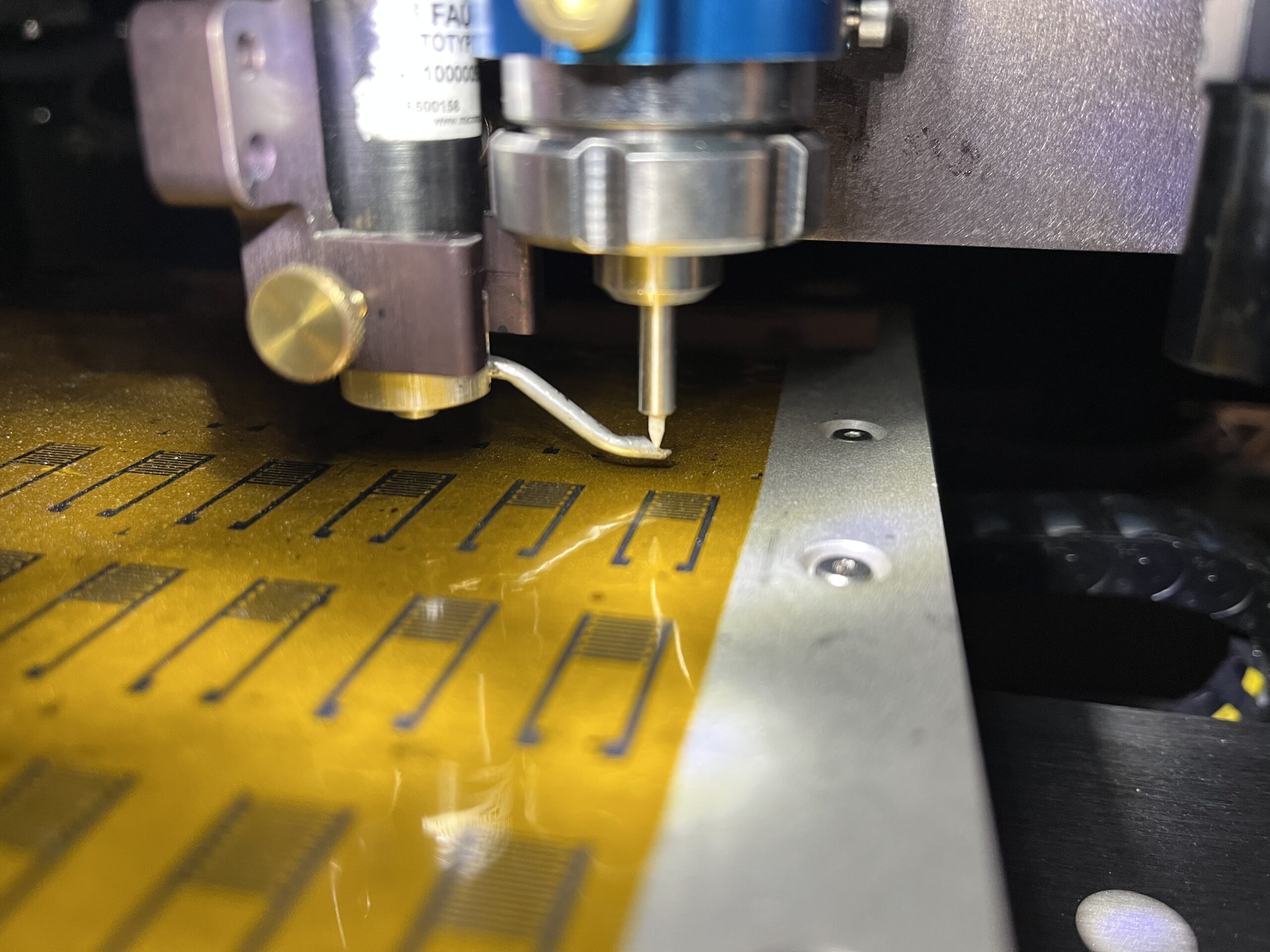
Researchers in the US may have solved AI’s energy problem – but not everyone is convinced
Engineers at Northwestern University in Chicago have developed artificial neurons that mimic the brain’s electrical signals convincingly enough to trigger responses from real cells. The breakthrough may pave the way to create a new generation of computers and prosthetics that can communicate directly with the nervous system, opening up new possibilities for restoring vision, hearing and movement.
The case for brain-inspired computing is partly one of necessity. Data centres powering popular AI models such as ChatGPT consume vast quantities of energy, with new nuclear power plants planned to meet rising demand. Digital processors are fast but inefficient – it is estimated that up to 99.9 per cent of the calculations a modern AI model makes are redundant.
“Because the brain is five orders of magnitude more energy efficient than a digital computer, it makes sense to look towards it for inspiration,” explains Mark Hersam, the Northwestern professor who led the research.
A so-called neuromorphic – or brain-inspired – computer built on artificial neurons could, in theory, perform more functions with fewer components and substantially less power. Hersam draws a historical parallel with the early 20th century. “Before the 1950s, computers were made out of vacuum tubes,” he says. “It wasn’t scalable – you’d have bigger and bigger rooms full of them to do computing. Then the integrated circuit arrived and there were visionaries who are now famous. Are we at a similar moment in history? Well, we will see.”
Not everyone is ready to celebrate. Steve Furber, an emeritus professor of computing at the University of Manchester and a leading expert in neuromorphic technology, says the breakthrough represents the frontier of an already cutting-edge field. For him, the leap to running AI models on such hardware is bigger than others think.
“We’re yet to see a compelling demonstration of those potential energy savings,” Furber says. “Nobody has yet built a large enough neuromorphic AI system to convincingly demonstrate that those savings can be realised. I think standard neuromorphic technology may have an impact in the next 10 or 20 years. Hersam’s technology will not – or at least is further out than that.”
Hersam himself is measured about the possible timeline. “It took six decades for computers to get to where we are today,” he acknowledges. “I hope we’ll be faster than that, but it’s probably 10-plus years, not 10-plus months.”
The advent of neuromorphic computing also poses a subtler problem. Greater efficiency does not automatically translate into lower power consumption. “If I came up with a 100-fold more efficient device, would they build 100-fold smaller data centres?” says Hersam. “I don’t think that’s going to happen. I just think you’d have 100-fold higher performance for the same data centre.”
In the short-term, the technology’s most visible applications are likely to be smaller-scale: advanced prosthetics and wearable diagnostics.
But the team at Northwestern have still made a genuinely significant breakthrough, a view Furber himself endorses even while exercising caution about the timeline. Whether it marks a turning point in computing history, or simply a promising step along a very long road, may only become clear decades from now.
Featured Image: Computers based on the human brain may be just around the corner. Credit: Mark Hersam
